
Having a small living room has some advantages to offer. Does that sound surprising or a bit unusual? A small living room is naturally cozy, and with a few smart choices, it can feel open and comfortable rather than crowded. You don’t need a huge budget or have to invest too much time in decorating it.
This guide is fully dedicated to solving the worries and concerns you may have about your small living room decor. The right layout, lighting, furniture, and clever storage ideas are all things you’ll discover here. Each idea is practical and easy to try, whether you’re working with a compact apartment living room or a small, awkward lounge.
Inside This Guide
- Start With the Right Layout
- Choose Furniture That Fits the Scale
- Pick Multi-Use, Storage Furniture
- Keep a Light, Cohesive Color Palette
- Use Mirrors to Add Depth and Light
- Go Vertical With Storage and Decor
- Let in and Layer the Light
- Add Cozy Texture Without Crowding
- Choose a Rug That Fits the Space
Start With the Right Layout
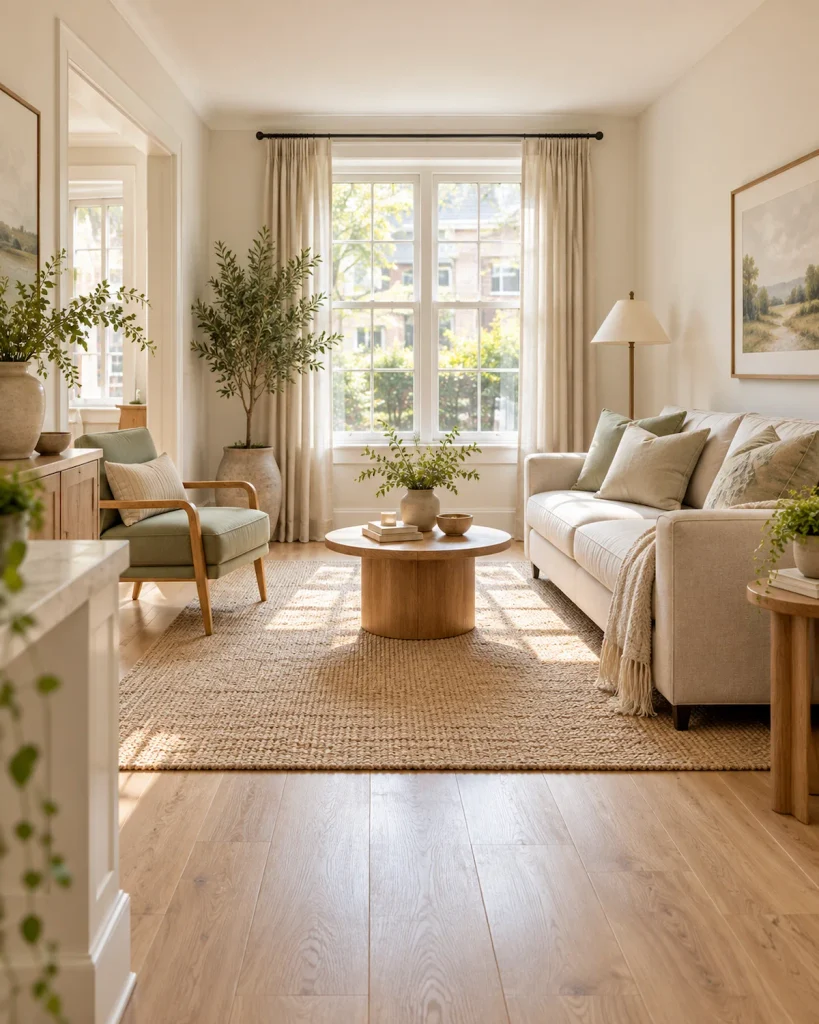
Before deciding on decorative pieces, choose the right layout based on your space. Start by deciding on a focal point—a window, a TV, or a fireplace—and arrange your seating around it.
Place the sofa against the wall if it helps free up space, and leave the central area open to avoid making the room look crowded. Getting the layout right makes the rest of the decorating much easier.
Choose Furniture That Fits the Scale

Choose a slim or apartment-sized sofa, a loveseat, or a pair of compact armchairs rather than a large sectional.
Furniture with legs, rather than pieces that sit flush to the floor, lets light pass underneath and makes the room feel more open. Choose a coffee table that is in proportion to your seating and the available space.
Avoid filling every surface. Let your room breathe and keep the arrangement intentional with a few well-chosen, thoughtful pieces.
Pick Multi-Use, Storage Furniture

In a limited space, look for furniture that can serve more than one function. A storage ottoman can work as a coffee table, extra seating, and a place to hide blankets or clutter.
Nesting tables tuck away when you don’t need them, a sofa with hidden storage makes use of otherwise wasted space, and a bench by the window offers both seating and storage underneath. Invest your effort in choosing pieces that store, offer seating, or serve another purpose while still fitting beautifully into the room.
Keep a Light, Cohesive Color Palette

To bring a noticeable change to your living room, stick to a light and cohesive color palette. Warm white, cream, beige, and pale sage reflect light and make the walls recede, which helps open up the space.
Keep the furniture and decor within a similar color range to make the entire arrangement look intentional and thoughtful. Add texture and a few muted accents to keep the room cozy without making the space feel smaller.
Use Mirrors to Add Depth and Light
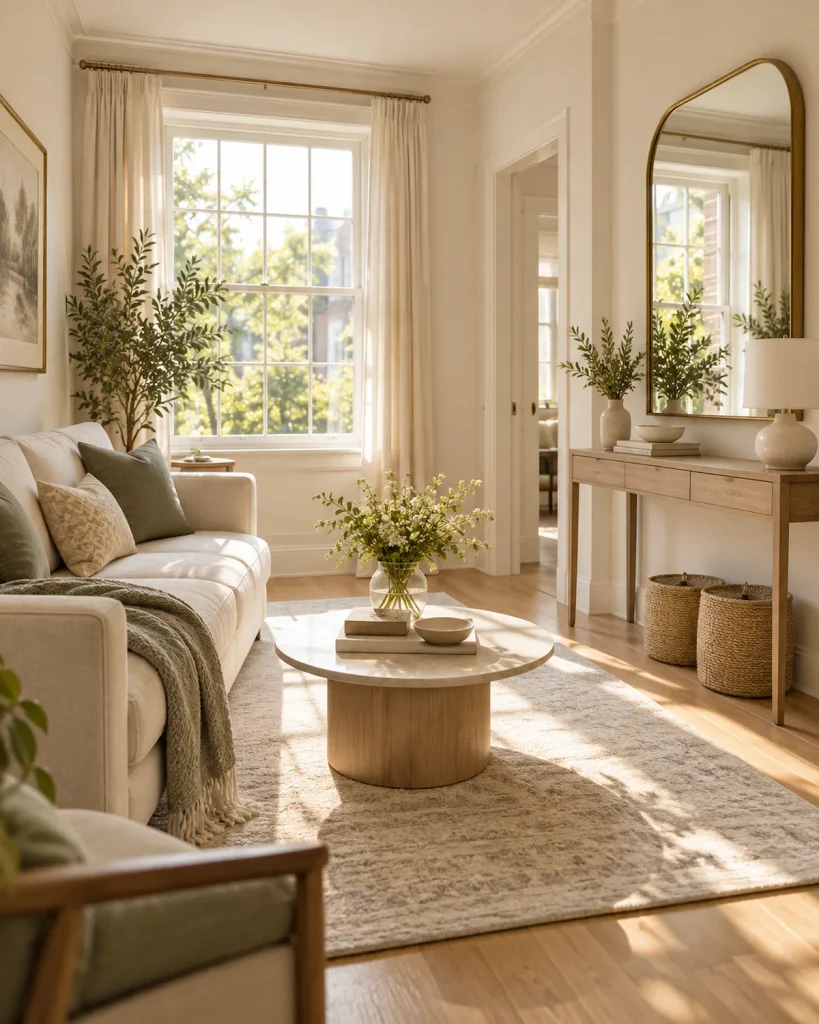
A mirror is a classic trick for making a small living room feel bigger, and it genuinely works. Mirrors reflect both daylight and lamp light, brightening the room, while also creating a sense of depth that makes the space feel more open.
Place a large mirror opposite or beside a window to bounce light around, or lean one against a wall for an easy, renter-friendly option. A mirror above the sofa or a console adds style while doing its job. You don’t need many—one well-placed mirror is enough to make a compact living room feel lighter and more spacious.
Go Vertical With Storage and Decor

When floor space is limited, the walls become your best resource. Decorating upward can also make the room feel taller.
Tall bookshelves can store your books while taking up relatively little floor space. Floating shelves hold books and decor without taking up any floor space, while hanging art or creating a gallery wall adds personality at eye level. Hanging your curtains high and wide can also make the room feel larger.
Let in and Layer the Light

Light makes a small living room feel bigger and more welcoming, so make the most of it. During the day, keep the windows as clear as you can—light curtains or blinds let daylight in and make the room feel more open. In the evening, layer in warmer light with a couple of lamps rather than relying on a single overhead fixture, which can make the room feel flat.
Warm-toned bulbs make a small room feel cozy and inviting at night. Bright by day and soft and warm by evening, good lighting makes a compact living room feel both more spacious and comfortable.
Add Cozy Texture Without Crowding
Sometimes adding a few layers can bring a noticeable change to a small space. A soft throw over the sofa, a couple of cushions, and a textured rug add comfort and depth while taking up very little space.
Layering different materials—a knit throw, linen cushions, or a woven basket—makes the room feel collected and cozy even when it is sparsely furnished. Try to keep the number of pieces low and the colors soft, so the overall arrangement doesn’t feel like everything is competing for attention.
Choose a Rug That Fits the Space
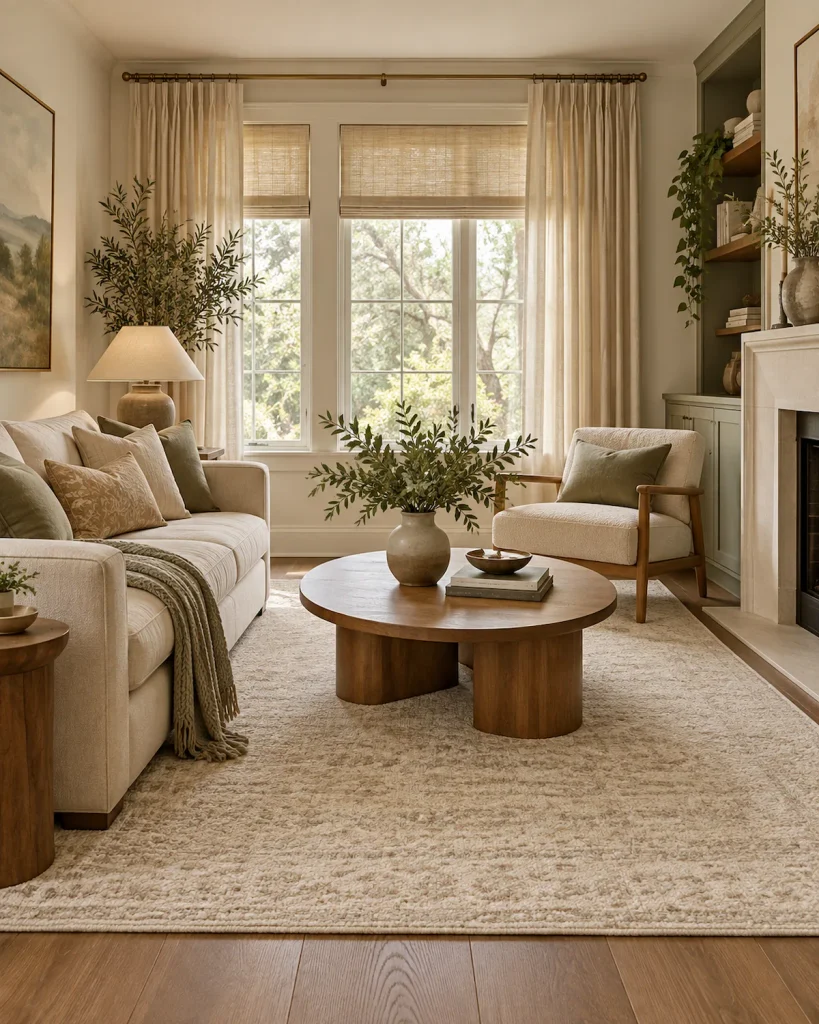
The right rug grounds a small living room and can actually make it feel bigger, while the wrong size can do the opposite. Aim for one that is large enough for at least the front legs of your seating to rest on it. A light or low-contrast pattern keeps the rug from overwhelming a small room.
Beyond visually grounding the space, a rug adds warmth and texture underfoot. Choosing the right size and tone is a simple way to make a compact living room feel cohesive and complete.
Final Thoughts
After all these ideas, keeping the entire arrangement tidy and simple is what makes even a small room look spacious and inviting. You don’t need the room to feel bare; the aim is simply to reduce visual noise so the space feels open and restful. A small living room that’s easy to keep tidy is far more relaxing to spend time in, and that sense of calm is what makes a compact space feel like a true retreat.
