
Creating a cozy home office takes a little careful thought, especially if you want a space where you can sit down, stay organized, and work comfortably. The right setup can have a real impact on how well you concentrate. When a workspace feels warm and cozy, it becomes much easier to settle in, stay focused throughout the day, and avoid that restless urge to be anywhere else.
The good news is that making a home office cozy doesn’t mean sacrificing function, and it doesn’t require a dedicated room or a big budget. Whether you have a whole room, a spare corner, or just a small nook, a few thoughtful choices can turn a plain desk setup into a space that feels calm and inviting.
These cozy home office ideas cover everything from lighting and seating to storage, greenery, and the small personal touches that make a difference — practical, realistic ideas you can actually use.
Inside This Guide
- Start With a Comfortable, Supportive Chair
- Layer in Warm, Task-Friendly Lighting
- Choose a Calm, Warm Color Palette
- Position Your Desk Near Natural Light
- Add a Soft Rug Underfoot
- Bring in Greenery and Plants
- Keep Storage Smart and Out of Sight
- Add Warmth With Natural Materials and Texture
- Make It Personal With Art and Objects
- Create a Cozy Home Office in a Small Space
- Add a Warm Scent and a Drink Station
- Manage Cords and Clutter
- Add a Comfortable Reading or Thinking Spot
- Keep It Tidy and Clutter-Free
Start With a Comfortable, Supportive Chair
A chair is one of the most important parts of any home office setup because it is where you spend most of your working hours. Look for something that supports your back and lets you sit comfortably for long stretches. An ergonomic office chair is worth considering if you work full days.

If you prefer a softer, less corporate look, a comfortable upholstered chair in a warm fabric can work beautifully, especially in a cozy setup. Add a small cushion or pillow for a little extra support and softness. Getting this first step right gives you a strong foundation for the rest of the room.
Layer in Warm, Task-Friendly Lighting
Lighting shapes how a home office feels more than almost anything else. Instead of relying on a single overhead light, layer a few warm light sources. A good desk lamp gives you focused light for reading and detailed work, while a floor lamp or small table lamp in the corner adds a softer glow that keeps the room from feeling stark.
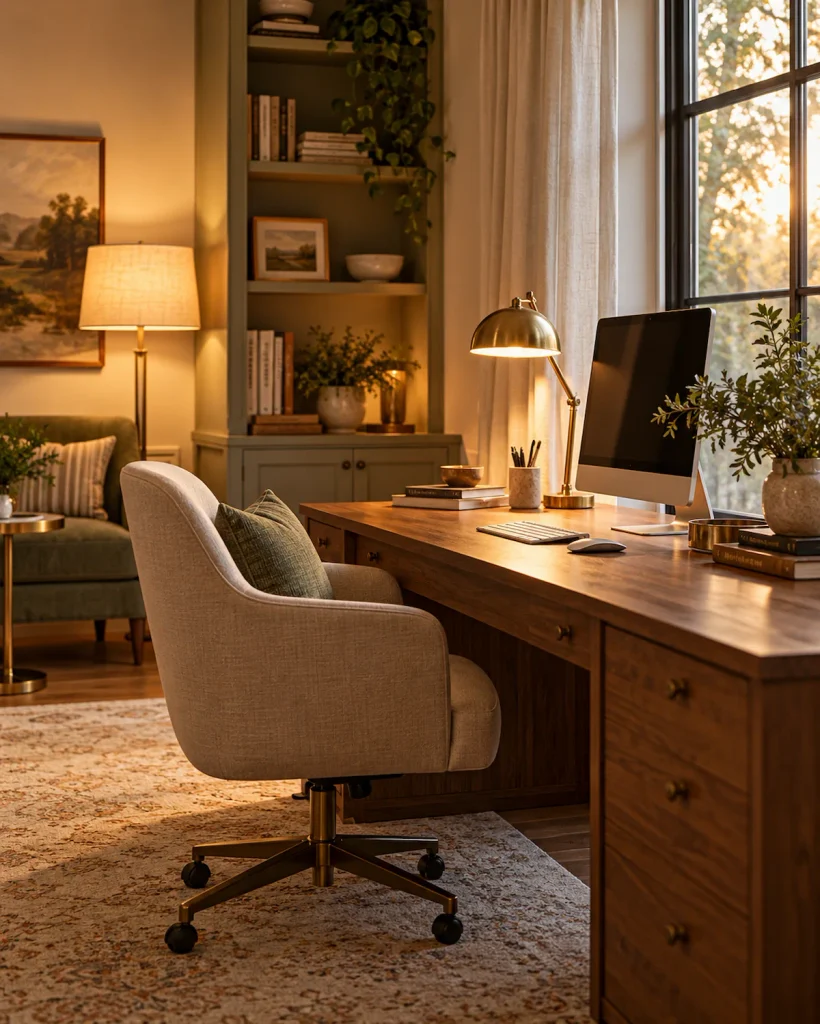
Choose warm-toned bulbs rather than harsh cool-white lighting if you want the room to feel calmer and more inviting, especially as daylight begins to fade. If you take video calls, position a light source in front of you rather than directly behind you. Good, layered lighting keeps you comfortable throughout a long day and makes the office feel inviting rather than institutional.
Choose a Calm, Warm Color Palette
Color has a real effect on how a workspace feels, so lean toward warm, calm tones that help the room feel focused without becoming cold. Soft neutrals such as cream, warm white, greige, and soft brown make a reliable base. You can then layer in gentle, grounding accents such as sage green, muted terracotta, or warm wood.
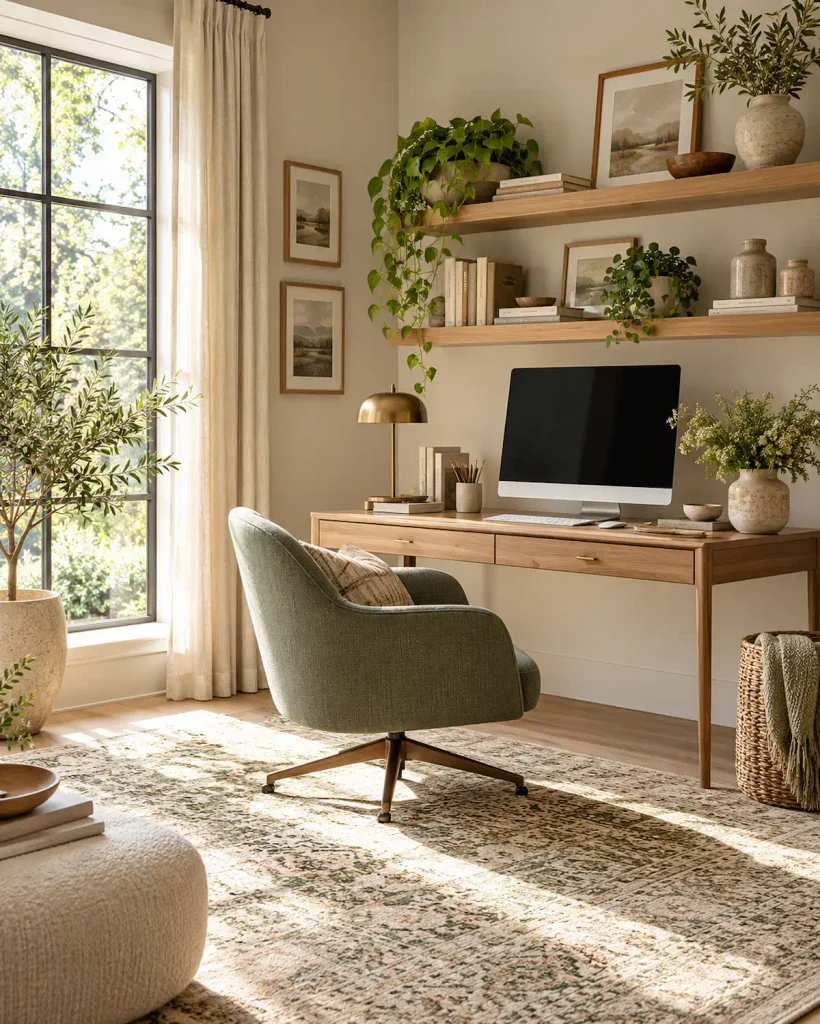
These colors feel settled and quiet, which works beautifully in a space designed for concentration. You don’t need to repaint the whole room. Even bringing a warmer palette into your chair, storage, rug, and desk accessories can make a noticeable difference.
Avoid overly stark or high-contrast combinations if you want the room to feel calm. A cohesive palette is one of the easiest ways to make a home office feel comfortable and pulled together.
Position Your Desk Near Natural Light
Natural light can make a home office feel brighter, more open, and much more pleasant to work in, so place your desk near a window if you have the space. Working beside a window gives you daylight and somewhere to rest your eyes when you want a short break from the screen.
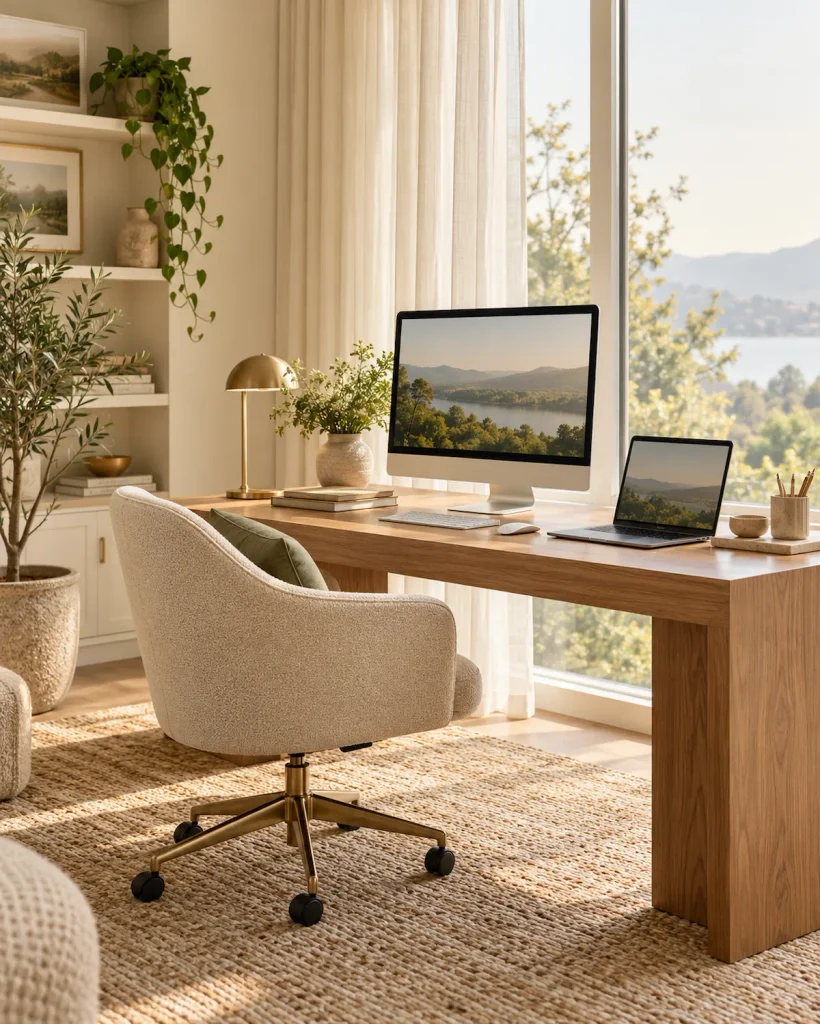
Positioning the window to the side of your desk usually works well because it helps reduce glare on the screen and avoids the strong backlighting that can happen when a window sits directly behind you during video calls. If a view isn’t possible, make the most of whatever daylight you have with light, airy window treatments that allow natural light through.
Being close to a window can make a home office feel less closed-in and more like a space you actually want to spend time in.
Add a Soft Rug Underfoot
A rug is an easy way to make a home office feel warmer and more finished, especially if you have hard flooring. It adds softness underfoot, helps absorb sound, and visually defines the working area — something that is especially useful if your office shares a room with another function.
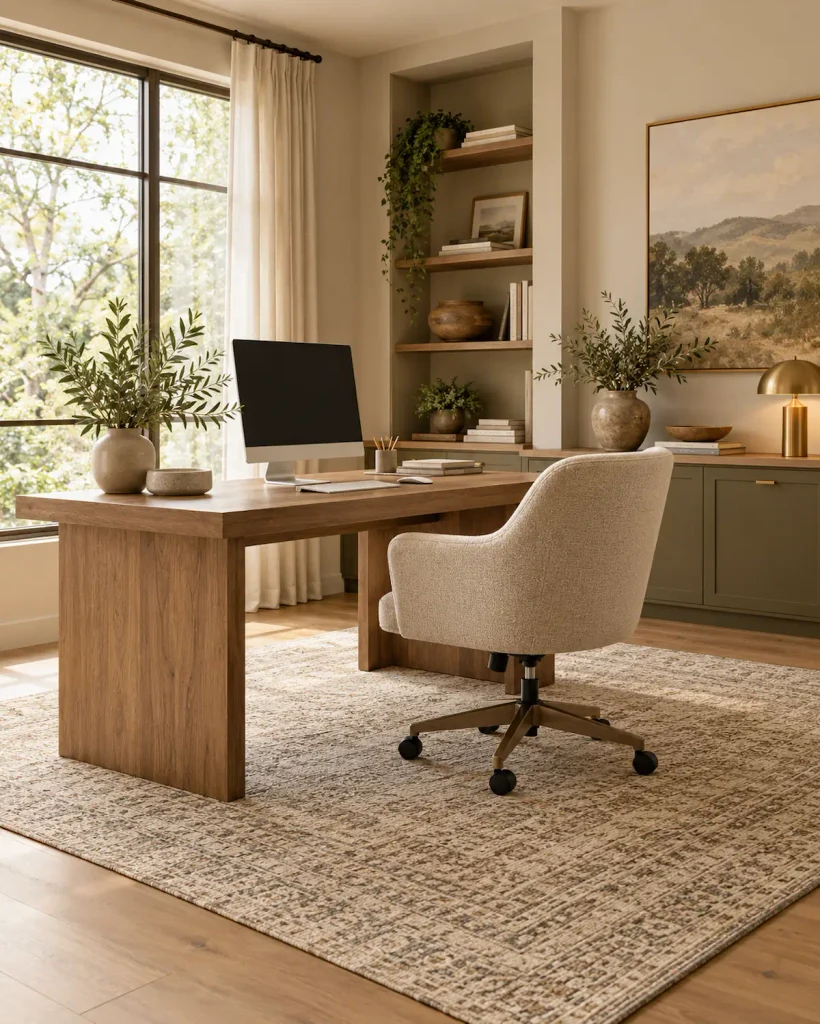
Choose something in a warm, neutral tone with a little texture, and make sure it is large enough that your chair can move without constantly catching the edge. A low-pile rug usually works best under a rolling office chair.
Beyond the practical benefits, a rug instantly softens the overall look of the room and helps the workspace feel like part of a comfortable home rather than a separate, sterile zone.
Bring in Greenery and Plants
Plants bring life, color, and a sense of calm to a home office, and they’re one of the simplest ways to make a workspace feel less sterile. A small plant on the desk, a trailing plant on a shelf, or a larger floor plant in a corner can all add a fresh, natural touch. Greenery also softens the hard lines of desks, monitors, shelving, and storage.
If you don’t have much natural light or time for plant care, choose low-maintenance options such as a snake plant, pothos, or ZZ plant. You can also use dried stems or artificial greenery to create a similar soft, cozy look. Even one or two plants in noticeable spots can warm up a workspace and make it feel more alive and inviting.
Keep Storage Smart and Out of Sight
A good home office needs somewhere to store paperwork, supplies, cables, and the small things that quickly collect around a desk. Closed storage such as a cabinet, credenza, or set of drawers keeps those items out of sight, which instantly makes the room feel tidier.

Woven baskets, fabric bins, and attractive boxes can hide smaller items while also adding warmth and texture. Floating shelves give you a place for books and a few decorative pieces without taking up valuable floor space.
The goal is simply to give everything a home so your work surfaces stay clear and the room feels less cluttered. Smart storage that looks good is what allows a home office to feel both organized and genuinely inviting.
Add Warmth With Natural Materials and Texture
Natural materials and layered textures are what often separate a cozy home office from a cold, purely functional one. Wood brings instant warmth, so a wooden desk, shelving, or even a few small wooden accessories can make a difference.
Woven baskets, a knit throw over the back of a chair, linen curtains, and ceramic pieces all add softness and a tactile, lived-in quality that glass and metal alone can’t create. Try mixing a few materials — wood, textiles, ceramic, and perhaps a little brass — so the room doesn’t feel flat.
These natural touches feel calm and timeless, and they pair beautifully with warm lighting and a soft color palette. Layering texture is one of the quickest ways to make a workspace feel grounded, comfortable, and pleasant to spend hours in.
Make It Personal With Art and Objects
A home office should feel like yours, and a few personal touches are what give it character. Hang a piece of art or create a small gallery wall at eye level. Add framed photos or display a few objects you genuinely enjoy.

A favorite mug, a candle, a small stack of books, or a decorative object can make the room feel more personal and intentional. The key is not to fill every surface. A few meaningful pieces usually look better than a crowded desk or shelf.
Personal details can also make a workspace feel more motivating because you’re surrounded by things you actually like. This is what turns a functional desk setup into a room you genuinely enjoy working in.
Create a Cozy Home Office in a Small Space
You don’t need a dedicated room to create a warm, functional home office. A corner, an alcove, or a slim desk against a wall can work beautifully. In a small space, scale is especially important. Choose a compact desk, a chair that tucks in neatly, and vertical storage such as wall shelves or a pegboard to keep the floor clear.
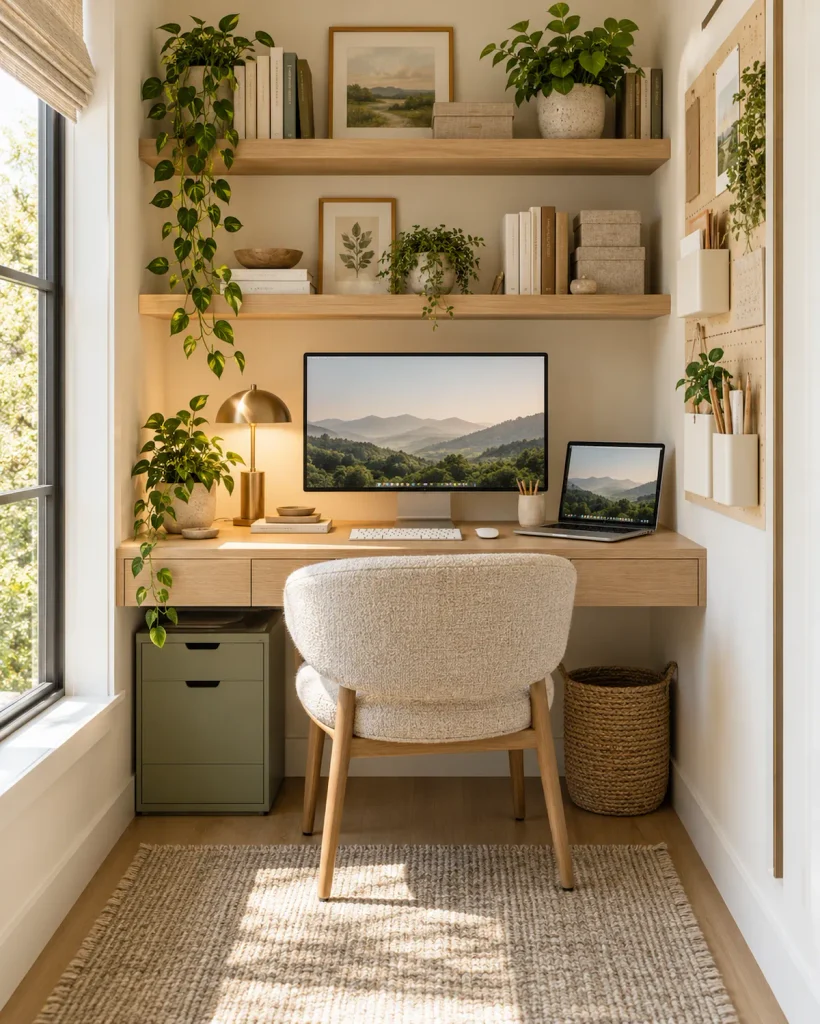
A small desk in a bedroom, living room, or hallway nook can still feel intentional with a lamp, a plant, and a piece of art that helps define it as its own little zone. Keep the palette light and cohesive so the area doesn’t feel cramped, and use a rug, shelving, or subtle change in decor to visually separate the workspace from the rest of the room.
With a few smart choices, even the smallest spaces can become a cozy and productive place to work.
Add a Warm Scent and a Drink Station
The small sensory details are easy to overlook, but they can make a home office feel genuinely comfortable. A candle, diffuser, or subtle scent such as cedar, vanilla, or something fresh can make the room more pleasant the moment you sit down.
A small drink station can also be useful. A tray with a kettle, favorite mug, tea, coffee, or a water carafe keeps everything close and adds a small daily ritual to your workspace. These touches don’t need to cost much, but they can make the space feel more thoughtful and inviting.
Working from home feels easier when small comforts are built into the room, and having a warm drink within reach is one of the simplest ways to make long hours at your desk feel a little nicer.
Manage Cords and Clutter
Nothing disrupts a calm home office faster than a tangle of visible cords, so a little cable management goes a long way. Clip cables to the back of the desk, run them through a cable sleeve, or tuck a power strip into a cable box to keep everything out of sight.
Using wireless accessories where practical — such as a keyboard, mouse, or charging pad — can help reduce visual clutter too. A tidy desk without a visible tangle of wires instantly looks more finished and organized.
It’s a small, often-overlooked step, but keeping cords under control can quietly make the whole room feel calmer, cleaner, and more put together.
Add a Comfortable Reading or Thinking Spot
If you have the room, a second place to sit away from the desk can make a home office feel more complete and comfortable. A small armchair in a corner with a floor lamp, a soft throw, and a side table gives you somewhere to read, take a call, or step away from the screen for a few minutes.

Even in a modest office, a comfortable chair tucked into a corner adds warmth and makes the room feel more inviting and less single-purpose. It also gives you an easy way to change positions during the day. If your desk is part of a bedroom, some of the same ideas used in small bedroom layouts can help you keep the workspace practical without making the room feel crowded.
This kind of relaxed seating is a small luxury that can make a workspace feel genuinely cozy rather than purely functional. A soft throw, warm lamp, and small side table can make this corner feel almost like a cozy reading nook, while still keeping it connected to the workspace.
Keep It Tidy and Clutter-Free
More than almost any single decorating choice, a tidy desk helps a home office feel calm and workable. Clutter builds up quickly in a space you use every day, and a messy desk can make it harder to settle down and focus.
Give everyday items a home, keep only what you’re actively using on the surface, and take a minute at the end of each day to reset the space for tomorrow. A clear desk isn’t only about appearance. It also makes it easier to begin the next working day without distractions already waiting for you.
A cozy home office doesn’t have to be minimal or bare, but it should feel ordered and restful. That balance of warmth and tidiness is what creates a workspace you’ll actually enjoy returning to.
Bringing It All Together
A cozy home office comes down to comfort, warmth, and a little organization — not a big budget or a dedicated room. Start with a supportive chair and warm, layered lighting, then build in a calm color palette, natural textures, greenery, and a few personal touches that make the space feel like yours.
Smart storage and a tidy desk help keep the room calm, while smaller comforts such as a rug, candle, and warm drink can make the hours at your desk genuinely more pleasant.
Whether you have a whole room or just a quiet corner, the best home office is one that feels comfortable to sit in and easy to focus in. Build it gradually with pieces you love, keep function and comfort in balance, and you’ll end up with a workspace that feels warm, personal, and productive — somewhere you actually want to spend your working day.
