
After a long, exhausting day, there’s something comforting about coming home to a living room that feels warm, peaceful, and inviting. It’s where you unwind with a cup of tea, curl up with your favorite book, or spend quality time with family and friends.
A cozy living room isn’t necessarily the biggest or most beautifully decorated room in the house. It’s a space that makes you feel comfortable the moment you walk in. And the good news? You don’t need expensive furniture, a huge budget, or a complete makeover to create that feeling.
Sometimes, a softer lamp, a comfortable throw, or a small change in furniture arrangement can make a surprising difference. These 10 cozy living room ideas focus on simple, practical ways to bring warmth, comfort, and personality into your home. Whether your style is modern, traditional, or somewhere in between, you’ll find inspiration that you can adapt to your own space and preferences.
Inside This Guide
- Start With Warm, Layered Lighting
- Add Soft, Layered Textures
- Choose a Warm, Calm Color Palette
- Layer in a Cozy Rug
- Arrange the Furniture for Comfort
- Bring in Natural, Warm Materials
- Add Greenery to Soften the Room
- Create a Cozy Reading or Relaxing Corner
- Use Candles and Warm Scents
- Keep It Personal and Uncluttered
1. Start With Warm, Layered Lighting
Lighting can completely change how a living room feels. A bright overhead light might be useful when cleaning or working, but it doesn’t always create the gentle, relaxing atmosphere you want in the evening. Instead of depending on one main light, try spreading several softer light sources around the room.
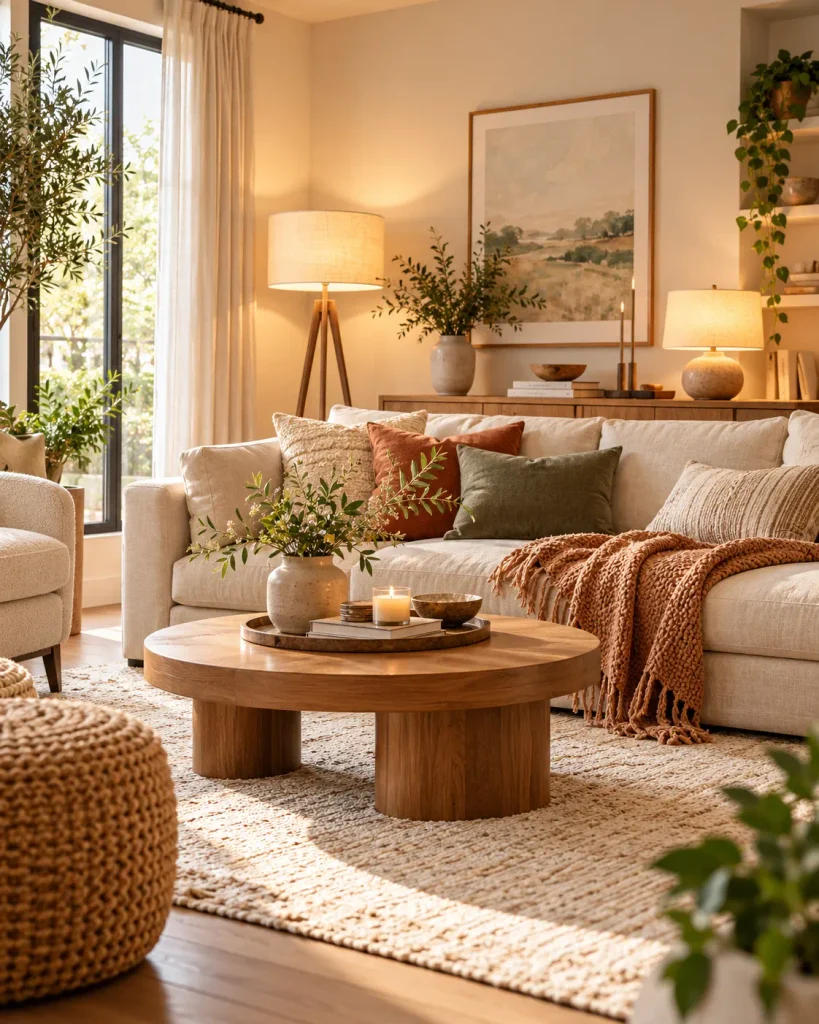
A table lamp beside the sofa, a floor lamp near an armchair, or a small lamp on a console table can create comfortable pockets of light. For a warmer atmosphere, choose warm-white bulbs around 2700K. They produce a soft, inviting glow without making the room feel excessively yellow.
If possible, use dimmable bulbs or smart lighting so you can adjust the brightness throughout the day. During daylight hours, let natural light do some of the work. Lightweight linen or cotton curtains can soften harsh sunlight while keeping the room bright and airy.
Pro Tip: Start with two lamps at different heights. For example, place a table lamp beside the sofa and a floor lamp in a darker corner. Switch off the main ceiling light in the evening and notice how much calmer the room feels.
Even in a small living room, thoughtfully placed lighting can create warmth without taking up much space.
2. Add Soft, Layered Textures
One of the easiest ways to make a living room feel cozy is to introduce a variety of soft, comfortable textures. Think about the difference between a plain sofa and one styled with a knitted throw, linen cushions, and a soft blanket. The furniture remains the same, but the room immediately feels more welcoming.
Start with materials that feel pleasant to touch. Cotton, linen, velvet, wool, and chunky knits are all wonderful choices. Mixing textures also creates visual depth. Try pairing a smooth linen cushion with a woven pillow, or placing a chunky knit throw against a soft velvet cushion.

You don’t need dozens of cushions to achieve this look. Two or three thoughtfully chosen cushions and a comfortable throw are often enough. Keep your fabrics within a similar color palette to create a cohesive appearance.
Pro Tip: Drape a throw loosely over one arm of your sofa and arrange two cushions in different fabrics beside it. Keep the other side relatively simple so the sofa still feels spacious and comfortable.
If you’re decorating on a budget, changing cushion covers is an affordable way to refresh your living room without replacing the cushions themselves. The goal is to create softness that looks beautiful while remaining comfortable for everyday use.
Soft textures aren’t just for living rooms. You can bring the same warmth into your bedroom with a few thoughtful touches. Explore our simple ways to make your bedroom feel cozier for more inspiration.
3. Choose a Warm, Calm Color Palette
The colors you surround yourself with can influence how relaxing a room feels. A warm, balanced color palette helps create a welcoming atmosphere without making the space feel too busy. Shades such as cream, oatmeal, warm beige, soft brown, muted terracotta, dusty rose, and sage green work beautifully in cozy living rooms.
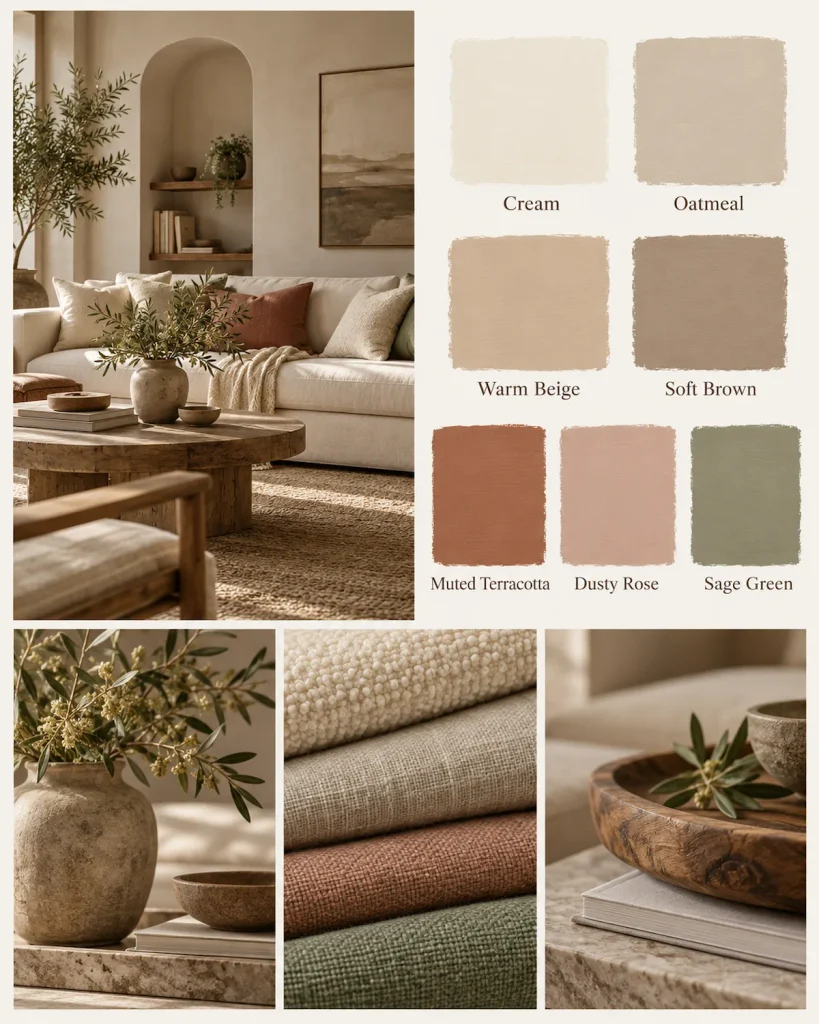
You don’t have to use all of them. In fact, choosing just a few complementary shades often creates a more peaceful result. One helpful decorating guideline is the 60-30-10 rule. Use approximately 60% of one dominant color, 30% of a secondary shade, and 10% of an accent color.
For example, imagine warm cream walls, a beige sofa, natural wooden furniture, and a few sage-green or terracotta accessories. The room feels connected and balanced without looking overwhelming. If your existing furniture is grey or white, you can still introduce warmth. Add beige cushions, wooden accents, textured curtains, or an earthy-colored throw.
Pro Tip: Before buying new accessories, select three colors that already work with your furniture and flooring. Use those shades consistently throughout the room.
4. Layer in a Cozy Rug
A rug can make a surprising difference in how comfortable a living room feels. Besides adding softness underfoot, it helps define the seating area and visually connects different furniture pieces.
For a cozy atmosphere, consider wool rugs, plush low-pile rugs, or textured woven designs in warm neutral shades. A rug with a subtle pattern can also add interest without overwhelming the room. However, choosing the right size is particularly important.

Ideally, your rug should be large enough for at least the front legs of your sofa and nearby chairs to rest on it. This helps the furniture look connected rather than scattered. Before purchasing, measure your seating area and consider how the rug will fit around your furniture. For extra texture, you can layer a smaller, softer rug over a larger flatwoven jute rug. This creates depth while bringing natural warmth into the room.
Pro Tip: If your current rug feels too small, experiment with repositioning it beneath the front legs of your sofa before replacing it. Adding a non-slip rug pad can also help keep everything secure and provide a little extra cushioning.
5. Arrange the Furniture for Comfort
You can have beautiful furniture and still end up with a living room that doesn’t feel particularly inviting. Sometimes, the problem isn’t what you own but how everything is arranged.
A cozy living room should make it easy to relax, have conversations, and move comfortably around the space. Instead of placing every piece of furniture against the walls, consider bringing your seating slightly closer together. Angle an armchair toward the sofa to create a friendly conversation area. Position the coffee table so drinks, books, and everyday essentials are within easy reach.
As a useful starting point, leave around 40–45 cm between the sofa and coffee table, adjusting the distance to suit your space. If your room allows, add a small ottoman or upholstered footstool. It offers somewhere to rest your feet and can provide extra seating when needed.
For smaller rooms, choose furniture with multiple uses. A storage ottoman or compact nesting tables can add convenience without making the room feel crowded. If you’re working with limited space, explore our small living room ideas for more practical ways to make every corner comfortable and functional.
Pro Tip: Sit in your usual spot and look around. Is your reading lamp close enough? Can you reach the coffee table comfortably? Is there enough space to walk past the furniture? Small adjustments based on how you actually use the room can make it noticeably more comfortable.
6. Bring in Natural, Warm Materials
Natural materials have a way of making a living room feel relaxed, grounded, and timeless. Wood, linen, rattan, jute, wool, and ceramics introduce warmth through their colors and textures. Even a few natural touches can make the room feel more inviting.
They also pair beautifully with both modern and traditional furniture. A wooden coffee table can soften a room filled with metal or glass finishes, while a woven basket adds texture and provides practical storage. Linen curtains bring a relaxed appearance, and ceramic vases or handmade pottery introduce subtle character.

You don’t need matching wooden furniture or an entirely natural interior. Mixing a few different materials often creates a more interesting, lived-in look. For example, a light oak coffee table, cream linen cushions, and a woven basket can complement each other without making the room feel overly coordinated.
Secondhand shops can be great places to find affordable wooden furniture and decorative pieces with character. The beauty of natural materials is that they add warmth without requiring lots of additional decoration.
Pro Tip: Introduce one natural element into an area that currently feels plain. Place a ceramic vase on your coffee table, add a woven storage basket beside the sofa, or replace a synthetic-looking accessory with something made from wood.
7. Add Greenery to Soften the Room
Plants bring freshness, color, and a sense of life into a living room. They can soften the sharp lines of furniture, fill an awkward corner, and create a lovely contrast against warm neutral colors.
You don’t need a collection of houseplants to make an impact. Even one carefully placed plant can change the atmosphere. A taller plant beside a window can balance a large sofa, while a small potted plant on a shelf adds a gentle natural touch.

If you’re new to houseplants, consider varieties such as snake plants, pothos, or ZZ plants. They are generally manageable for beginners, although each has its own light and watering requirements.
Choose plants according to the actual light conditions in your home. If your room receives very little natural light, dried stems or realistic artificial greenery can create a similar decorative effect without requiring regular plant care.
Pro Tip: Place a medium-sized plant in an empty corner and choose a pot that matches your existing color palette. A warm ceramic planter or woven-style basket can make the arrangement feel more intentional. For smaller living rooms, use narrow plant stands, shelves, or hanging planters to save floor space. If you have pets, remember to check whether a plant is safe for them before bringing it home.
8. Create a Cozy Reading or Relaxing Corner
Sometimes, the coziest part of a living room is a small corner designed for doing absolutely nothing productive. A comfortable chair, a little warm lighting, and somewhere to place a cup of tea can turn an unused area into your favorite spot.
Start by choosing a quiet corner, preferably near a window if you enjoy natural light. Add a comfortable armchair with good back support, a small side table, and a floor or table lamp. A soft throw and one supportive cushion can make the chair feel even more inviting.
If you enjoy reading, keep a few favorite books nearby to have your cozy reading nook. A woven basket or narrow bookshelf can help organize them without taking up much space. But a relaxing corner doesn’t have to be a dedicated reading nook. It could simply be a place where you enjoy your morning coffee, listen to music, or take a quiet break.
Pro Tip: If you don’t have space for an additional armchair, create a relaxing spot at one end of your existing sofa. Add a comfortable cushion, a nearby lamp, and a small side table. Design the corner around your everyday habits rather than copying an elaborate setup that you may rarely use.
9. Use Candles and Warm Scents
Creating a cozy atmosphere involves more than furniture and color. A few small sensory details can make a living room feel even more welcoming. Candles are a simple way to introduce gentle, flickering light, particularly during quiet evenings.
Arrange two or three candles of different heights on a decorative tray with suitable, heat-resistant holders. Choose neutral candle colors that blend naturally with your decor, such as cream, warm beige, or soft ivory. Fragrance can also contribute to the atmosphere. Scents such as vanilla, cedarwood, sandalwood, or a subtle seasonal blend can make a room feel comforting.

However, it’s best to keep fragrances light. Too many scented candles or diffusers can become overwhelming, especially for people who are sensitive to strong smells.
Pro Tip: Create a simple evening arrangement with a flameless candle, a small ceramic vase, and your favorite book on a coffee table or side table. For real candles, always use suitable holders, keep them away from flammable materials, children, and pets, and never leave them burning unattended.
If you prefer avoiding real flames, battery-operated candles offer a similar warm glow without an open flame. Sometimes, these quiet little details make the biggest difference.
10. Keep It Personal and Uncluttered
A truly cozy living room should feel like it belongs to the people who live there. It’s the family photographs, favorite books, meaningful artwork, and little treasures collected over time that give a room its character and personality. Without personal details, even a beautifully decorated room can feel a little generic.
But adding warmth doesn’t mean filling every corner of the room. Too many decorative objects can make a space feel crowded and difficult to maintain. Instead, choose a few things you genuinely love and give them room to stand out. Display a favorite photograph on a shelf, place a beautiful book on the coffee table, or hang artwork that makes you happy.
Pro Tip: Clear your coffee table and add back only two or three items that are either useful or meaningful. Repeat this on shelves and side tables, leaving some open space between objects.
For everyday clutter, use practical storage that blends with your decor. Woven baskets are useful for blankets, while cabinets and storage ottomans can hide remotes, cables, and other small essentials.
If you’re working with a small living room, keeping the floor and main walking areas clear can make the whole space feel more comfortable.Remember, cozy doesn’t mean perfectly arranged. It means creating a space that feels personal, comfortable, and easy to live in.
Final Thoughts
Creating a cozy living room isn’t about spending a fortune or completely changing your decorating style. It’s about making your space feel warmer, softer, and more comfortable for everyday life. Start with the changes that matter most to you. Maybe your living room needs better lighting, a softer rug, or a more inviting furniture arrangement.
Add natural textures, calming colors, and a few personal touches as you go. You don’t need to do everything at once. Sometimes, rearranging what you already own or adding one thoughtfully chosen accessory is enough to make the room feel different.
Whether your living room is large or small, the most important thing is creating a place where you can slow down, feel comfortable, and enjoy being home.
