
Minimalism does not have to feel cold, empty, or stark. A well-designed minimalist living room can actually be one of the most calming and comfortable spaces you can create. At its heart, minimalism isn’t simply about having less. It’s about keeping what you love and use, so the room feels open, restful, and easy to live in.
The best minimalist living rooms strike a balance: clean and uncluttered, but still warm and inviting. You don’t need a blank white box or expensive designer furniture to get there. With a considered color palette, a few quality pieces, natural textures, and the discipline to leave some space open, almost any living room can feel serene and put-together.
These minimalist living room ideas show you how to create that calm, intentional look while keeping it cozy rather than clinical. Take the ideas that suit your space and build a living room that feels like a true retreat.
Start With a Calm, Neutral Color Palette

Before moving forward, all you need to do is fix the colour combination of your living room. A neutral color palette is the foundation of almost every minimalist living room because it creates a calm, cohesive background that allows the space to feel open and restful. Warm whites, cream, soft beige, greige, and gentle gray all work beautifully. Keeping the walls, large furniture, and main textiles within a narrow range of tones is what makes a room feel serene rather than busy.
Warm neutrals are especially good for a minimalist space that still feels inviting. Cool, stark whites can sometimes make a room feel cold, while warmer tones keep everything soft and comfortable.
You don’t have to stick to one single color. The trick is to stay tonal, layering several shades within the same range so the room has depth without visual noise. This calm base makes everything else you add feel intentional.
Choose a Few Quality Pieces Over Many
Minimalism is about quality over quantity. Instead of filling a living room with lots of furniture, choose a few well-made pieces you genuinely love. A comfortable sofa, one or two chairs, a coffee table, and a single storage piece are often all a room needs. Buying fewer, better things means each piece can be a little nicer, and the room never feels crowded. This idea is also super helpful when you have a small living room.
When you shop, think about whether you’ll still love a piece several years from now. Look for something timeless, as simple designs tend to age far better than trend-driven ones in a minimalist space. Minimalism is about turning your living room cozy.
This restraint is what gives a minimalist living room its calm, uncluttered feeling. It can also be easier on your budget over time because you’re not constantly replacing things.
Keep the Lines Clean and Simple

The furniture you choose has a huge effect on how minimalist a room feels, and clean, simple lines are key. Look for pieces with a low profile, straight or gently curved silhouettes, and little ornamentation. A streamlined sofa, a simple wood coffee table, or a chair with a clean shape can all work beautifully.
Fussy, heavily detailed furniture adds visual weight that can work against a minimalist look. Furniture with visible legs rather than skirted bases can help too, allowing light to pass underneath so the room feels more open.
You don’t need everything to match, but keeping the shapes simple and consistent helps the whole space feel calm and considered. Clean lines are quietly doing a lot of the work in a minimalist living room.
Let in Plenty of Natural Light

Natural light is one of a minimalist living room’s best features, making the space feel open, airy, and alive. Keep your windows as clear as you can. Skip heavy, dark drapes in favor of sheer panels, simple linen curtains, or clean blinds that allow plenty of daylight into the room. If privacy allows, sometimes leaving a window bare is the most minimalist choice of all.
Arrange your seating to make the most of the light and avoid blocking windows with tall furniture. Light-colored walls and a few well-placed mirrors can also help bounce daylight around the room. A bright, naturally lit living room feels effortlessly calm and spacious, which is exactly what minimalism is trying to achieve.
Layer in Natural Materials and Texture

One of the biggest risks with a minimalist, neutral room is that it can feel flat or cold, and natural materials are the perfect antidote. Wood, rattan, jute, linen, wool, stone, and ceramic all add warmth, depth, and a tactile, organic quality without bringing in too much color or clutter. A wood coffee table, a jute rug, linen cushions, a woven basket, or a stone vase can add just enough texture to make a pared-back room feel rich and inviting.
Because these materials are quiet and natural, they fit beautifully into a minimalist palette while keeping the space from feeling sterile. Layering two or three different textures is often what separates a cozy minimalist living room from a stark one. This is one of the most important tricks for keeping minimalism warm.
Create One Clear Focal Point
Every living room needs a focal point, and in a minimalist space that single point of interest does a lot of work. Rather than spreading decoration around the room, choose one area to draw the eye. It might be a large piece of art, a fireplace, a statement window, or a beautifully simple sofa.
The rest of the room should stay calm and support that focal point rather than compete with it. This approach is what makes a minimalist room feel intentional rather than empty.
There should be something clear to look at, but nothing overwhelming. Keeping one strong focal point also makes decorating easier because you can let one area shine while keeping everything around it quiet and understated.
Leave Space Around Your Furniture
Negative space — the empty area around and between your furniture — is one of the defining features of minimalist design, and it is often the hardest thing to allow yourself. Resist the urge to fill every corner and every wall. Leaving space around a sofa, keeping part of a wall bare, or allowing a clear path through the room gives the eye somewhere to rest and makes the whole space feel calmer and larger.
This breathing room is what gives minimalism its serene quality. If a room feels crowded, the answer may be to remove something rather than simply rearrange it. Learning to see empty space as a design feature rather than something that needs to be filled is central to the minimalist look.
Add Warmth With Soft Textiles
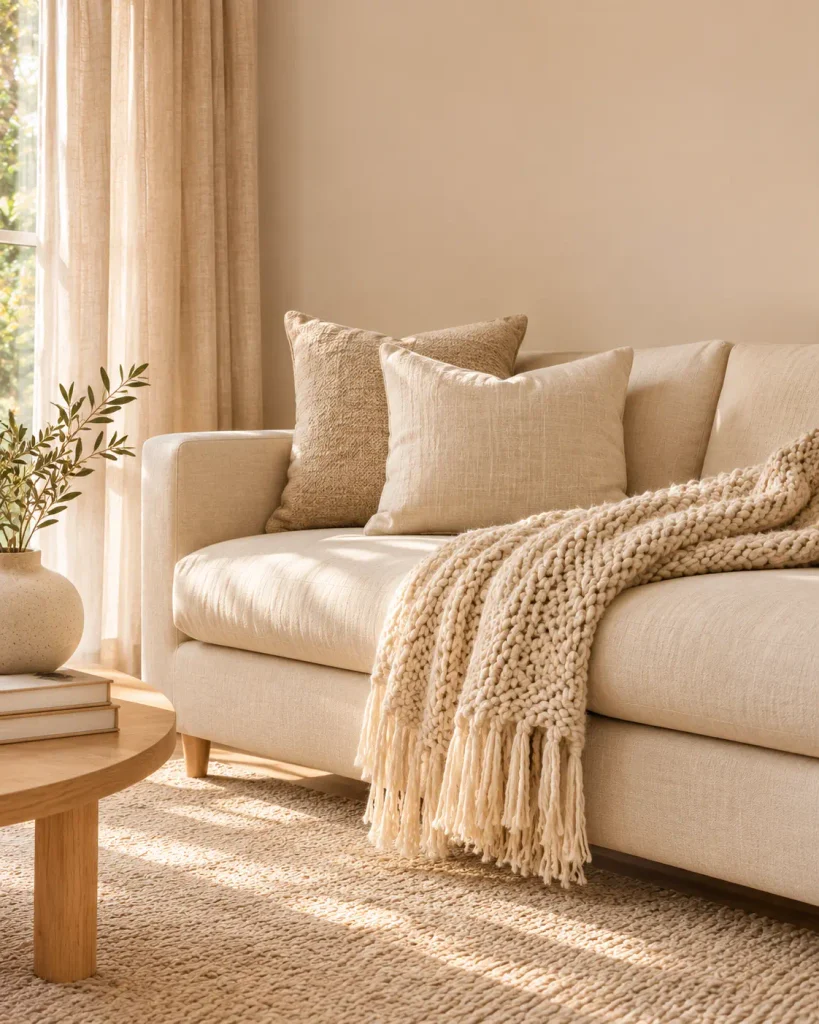
Minimalist doesn’t have to mean hard or uncomfortable. Soft textiles are one of the easiest ways to keep a pared-back living room feeling cozy and liveable. A chunky knit throw over the sofa, a couple of linen or wool cushions, and a soft rug underfoot can add comfort and warmth without cluttering the space.
Keep them in neutral or tonal colors so they blend naturally into your palette rather than competing for attention. Choose quality natural fibers that feel good to touch. A few well-chosen textiles are often enough to make a minimalist room feel genuinely inviting.
Limit Your Accessories
Accessories are where minimalism is often won or lost. Rather than covering every surface with small objects, choose a few meaningful pieces and give them room to breathe. A single ceramic vase, a stack of two or three books, one sculptural object, or a simple candle can make more impact than a crowded shelf.
Style a surface, then consider taking one or two things away. Each piece you keep should earn its place, either because you love it or because it adds something useful or beautiful to the room.
Limiting accessories keeps surfaces clear and calm, which is the whole point of a minimalist living room. When in doubt, less really is more here.
Use Hidden and Built-In Storage

Clutter is the enemy of a minimalist living room, so smart storage is essential for keeping everyday items out of sight. Closed storage — such as a sideboard, cabinet, storage ottoman, or built-in shelving with cabinet doors — can hide remotes, chargers, blankets, and other everyday items so surfaces stay clear.
Built-in storage works especially well in a minimalist space because it can sit flush and clean, almost disappearing into the walls. Closed storage is particularly useful in small spaces, where keeping everyday items out of sight can instantly make the room feel calmer and less crowded. Baskets and boxes can tuck away smaller items while also adding a little natural texture.
The goal is to give everything a dedicated home so nothing needs to sit out unnecessarily. Good hidden storage is what makes it realistic to keep a minimalist living room looking calm and uncluttered day to day.
Add a Single Statement Piece
A minimalist room doesn’t have to be plain. One striking statement piece can give it personality and keep it from feeling boring. This might be a sculptural armchair, a beautiful light fixture, an oversized piece of art, or a vintage find with character. A comfortable statement chair can even help turn an unused corner into a cozy reading nook without adding much visual clutter.
Because the rest of the room is quiet and restrained, a single statement piece stands out beautifully and becomes a natural focal point. The key is to choose just one. Two or three statement pieces can start competing with each other and lose their impact.
Let one special item do the talking and keep everything around it simple. This is how a minimalist living room can feel both pared-back and full of personality at the same time.
Bring in a Little Greenery

A touch of greenery brings life and a natural, calming quality to a minimalist living room, softening clean lines and neutral tones. You don’t need a jungle of plants. One well-placed plant in a simple pot often has more impact than several smaller ones.
A large floor plant in a corner, a small plant on a shelf, or a few stems in a vase can add freshness without creating clutter. Choose a simple, sculptural plant such as a fiddle-leaf fig, olive tree, or snake plant, along with a plain neutral pot that fits your palette.
If you prefer something low-maintenance, a stem or two of dried foliage can work beautifully too.Greenery is an easy, natural way to keep a minimalist room feeling warm and alive.
Hang a Mirror to Open Up the Room

A mirror is a minimalist’s friend, especially in a smaller living room. It reflects light and views, helping the space feel brighter, larger, and more open without adding visual clutter.A single large mirror leaned against a wall or hung above a sofa or console can work as both a practical feature and a clean, simple piece of decor.
Choose a frame that fits your palette, such as warm wood, thin black metal, or a simple arched design, and keep it uncomplicated. Place the mirror opposite or beside a window where possible to bounce natural light around the room. One well-placed mirror can make a modest minimalist living room feel noticeably more spacious and airy.
Keep the Coffee Table Simple
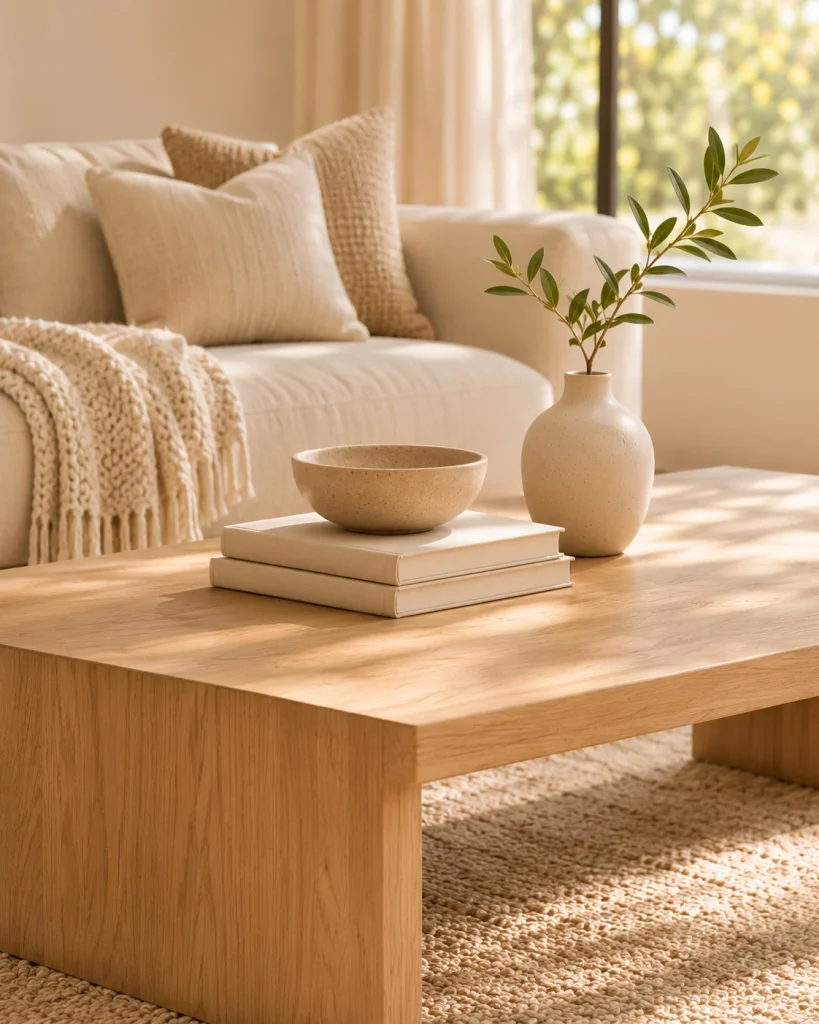
The coffee table often sits at the center of the living room, so keeping it simple helps the whole space feel calmer. Instead of filling the surface with lots of decorative objects, choose two or three items with different heights or textures. A small stack of books, a ceramic bowl, and a simple vase or candle can be enough.
Leave plenty of empty surface visible so the table still feels functional and uncluttered. A tray can also help group smaller items together and make the arrangement feel intentional rather than scattered.
The goal isn’t to leave the coffee table completely empty. It’s to style it lightly so it contributes to the room without becoming another source of visual noise.
Add One Subtle Accent Color

A completely neutral minimalist room can sometimes feel a little flat, so one subtle accent color can bring in personality without disrupting the calm feeling. Muted green, dusty blue, terracotta, soft brown, burgundy, or another earthy tone can work beautifully against a warm neutral base.
You only need a small amount. Bring the color in through one cushion, a piece of artwork, a throw, or a ceramic object rather than repeating it everywhere. Keeping the accent restrained allows it to stand out while the room still feels cohesive and quiet.
Choose a color you genuinely enjoy rather than following a short-lived trend. In a minimalist room, even a small amount of color can make a noticeable difference.
Keep It Tidy to Keep It Calm

More than any single design choice, a minimalist living room depends on being kept tidy. That’s what makes it feel calm rather than simply sparse. Because there’s less in the room, anything out of place tends to show quickly, so building a few simple habits can help.
Give everyday items a home, do a quick reset at the end of the day, and deal with clutter before it begins to build up. The good news is that a minimalist room is often easier to tidy than a full one because there is simply less to manage.
This ongoing sense of calm is really one of the biggest rewards of minimalism: a space that feels restful, uncluttered, and ready to relax in whenever you walk through the door. Keeping it simple is what keeps it serene.
Bringing It All Together
A minimalist living room isn’t about stripping everything away. It’s about being intentional. With a calm neutral palette, a few quality pieces, natural textures, and plenty of breathing room, you can create a space that feels open, serene, and genuinely comfortable.
The warmth comes from natural materials, soft textiles, greenery, and a subtle accent or two, which keep the room from ever feeling cold. Start with one or two of these ideas rather than trying to do everything at once, and let your living room evolve slowly as you edit down to the pieces you truly love.
However large or small your space, a minimalist approach can turn it into a calm, uncluttered retreat — somewhere that feels as good to live in as it looks.
