
A bedroom is where the exhaustion of the day finally begins to fade. It is one of the most important spaces in the home for relaxing, slowing down, and finding a sense of peace and comfort after a long day. Unfortunately, we often focus more on decorating the living room, kitchen, or dining area, while the bedroom receives less attention. This guide will walk you through some of the simplest ways to make your bedroom feel warmer, calmer, and more comfortable. The ideas below are easy to follow and can be adapted to almost any space. You can try one at a time and see the difference, or gradually work through several. The goal is simply to create a bedroom that feels cozy, restful, and truly comfortable.
How to Make your bedroom feel cozier
- Layer your bedding for warmth
- Choose soft, calming colors
- Add warm bedside lighting
- Bring in natural wood tones
- Put down a soft rug
- Soften the windows with curtains
- Mix different textures
- Create a small reading corner
- Keep clutter under control
Layer Your Bedding for Warmth

Bedding is the heart of a cozy bedroom, so it is worth getting right. A single flat sheet and duvet can look neat, but layering is what makes a bed feel warm and inviting. Choose soft, breathable sheets, add a duvet or comforter, then finish with a folded quilt or coverlet across the lower half of the bed. This extra layer is a beautiful way to showcase the bedding while also making the bed feel softer and more comfortable. Natural fabrics such as cotton and linen in cream, beige, or soft taupe create a calm and understated look. Keep the layers within a consistent tonal range to avoid making the bed feel crowded or overfilled. This simple approach helps give the entire room a softer and more restful appearance
Choose Soft, Calming Colors

Color has a strong influence on the atmosphere of a room. For a bedroom, choose a gentle, low-contrast palette that encourages relaxation. Soft, muted tones such as warm white, taupe, sage green, and dusty mauve keep the space feeling calm and cohesive, which is exactly what you want in a room designed for winding down. A consistent color palette prevents different elements from competing for attention and allows the room to feel visually peaceful. You do not need to repaint the entire bedroom to benefit from these colors. Instead, introduce them through bedding, curtains, cushions, rugs, or other soft furnishings. For a little extra warmth, muted terracotta or warm brown accents can add depth without disturbing the peaceful atmosphere.
Add Warm Bedside Lighting
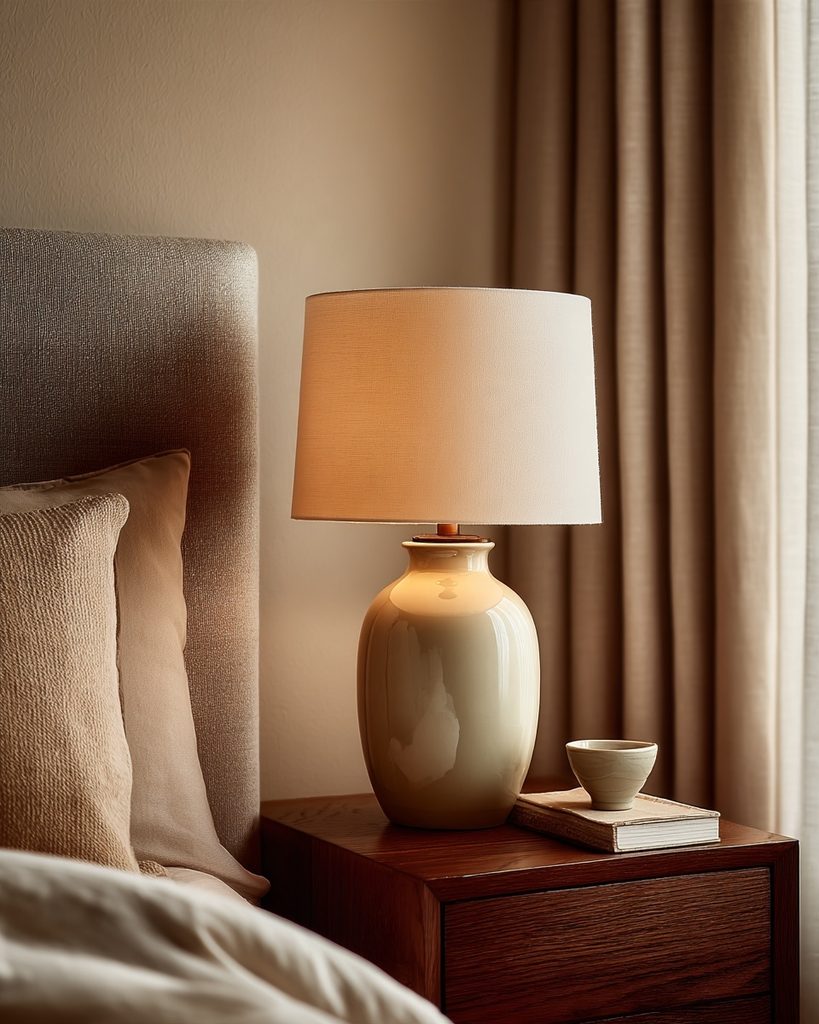
Lighting can have a significant effect on the mood of a bedroom. Bright light can make a room feel energetic, while softer lighting creates a much calmer and more relaxing atmosphere. That does not mean the room needs to be dark; the key is choosing the right type of light. A softer, lower light source beside the bed can completely change the mood and make the space feel more comfortable before sleep. A bedside lamp with a warm-toned bulb, around 2700K, casts a gentle glow that is ideal for reading or unwinding. You can also use a matching pair of bedside lamps to create a balanced look on both sides of the bed. Choose shades that diffuse the light softly rather than creating harsh brightness, and consider dimmable bulbs if you want more control over the atmosphere.
Bring In Natural Wood Tones
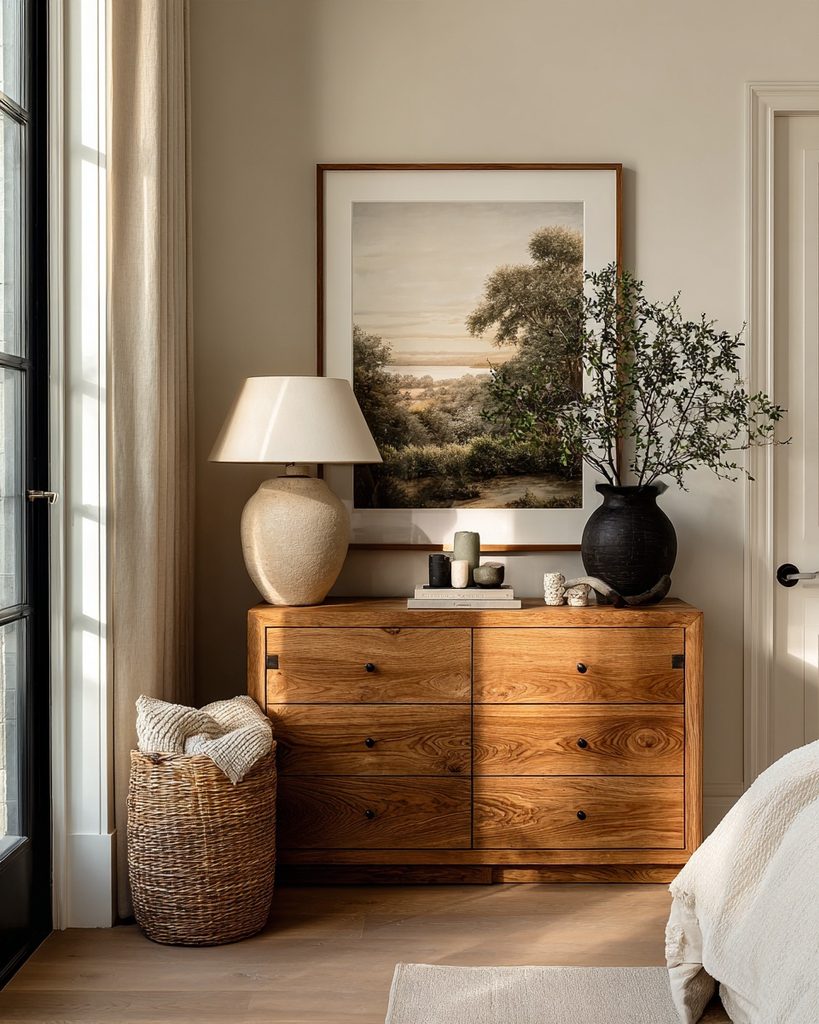
Wood brings a natural warmth to a bedroom that painted surfaces and fabrics cannot quite replicate. Its grain and warm color soften the space and help it feel grounded, comfortable, and lived-in. If your furniture is mostly white or upholstered, introduce wood through a nightstand, bench at the foot of the bed, small stool, dresser, or wooden picture frame. Warm-toned woods such as oak and walnut work especially well with a cozy neutral palette. There is no need to fill the entire room with wooden furniture or make everything match perfectly. A few carefully chosen wood elements are enough to spread warmth throughout the room. The change may be subtle, but it can make the space feel more complete, personal, and thoughtfully designed.
Put Down a Soft Rug
There are few things less inviting than stepping onto a cold, hard floor first thing in the morning. A soft rug solves that problem while also making the bedroom feel noticeably warmer, both physically and visually. Beyond comfort, a rug adds texture and helps define the area around the bed. For the coziest effect, choose something with a soft or gently textured surface in a warm neutral tone, and make it large enough to extend beyond the sides of the bed so your feet land on it when you get up. If you have hard flooring and a large rug is not practical for your room or budget, even a smaller runner placed beside the bed can work beautifully and provide the same sense of softness.
Soften the Windows With Curtains
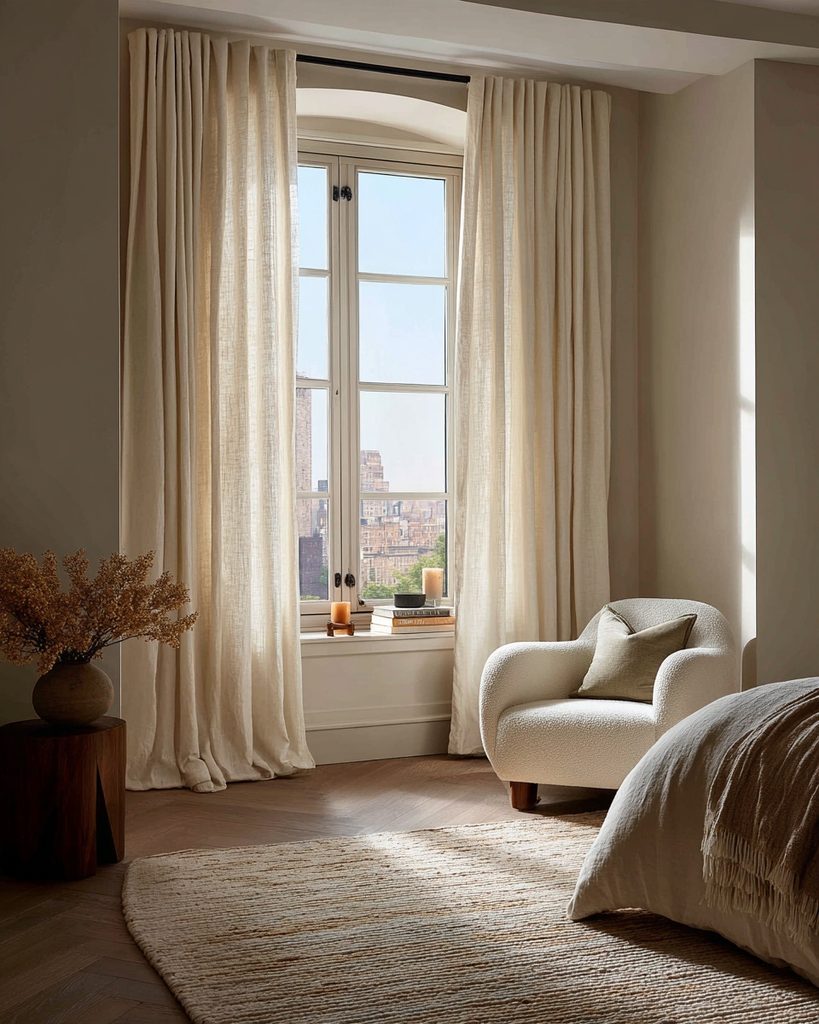
Curtains are one of the simplest ways to make a bedroom feel softer, more polished, and more intentional. They soften the edges of the room, add another layer of texture, and give you greater control over light and privacy. Floor-length curtains in a natural fabric such as linen or cotton feel relaxed yet elegant, and hanging them slightly above the window frame can make the ceiling appear higher. Warm neutral shades such as cream, oatmeal, or soft taupe keep the overall look calm and allow the curtains to blend naturally with the rest of the room. If you prefer a darker bedroom in the morning, a slightly heavier fabric or lined curtain can also help block outside light while adding another layer of warmth and comfort.
Mix Different Textures

To prevent your bedroom from feeling flat, mix different materials and textures to add warmth and subtle visual interest. Combine smooth cotton sheets with a textured coverlet, linen curtains with a soft rug, or a woven basket beside a wooden nightstand. This variation makes the room feel more inviting without requiring a lot of additional decoration. The key is to keep the colors relatively restrained while allowing the textures to do the work. This way, the room can feel layered and visually rich without looking busy or overwhelming. It is one of the easiest ways to make a simple, tidy bedroom feel genuinely warm and comfortable.
Create a Small Reading Corner
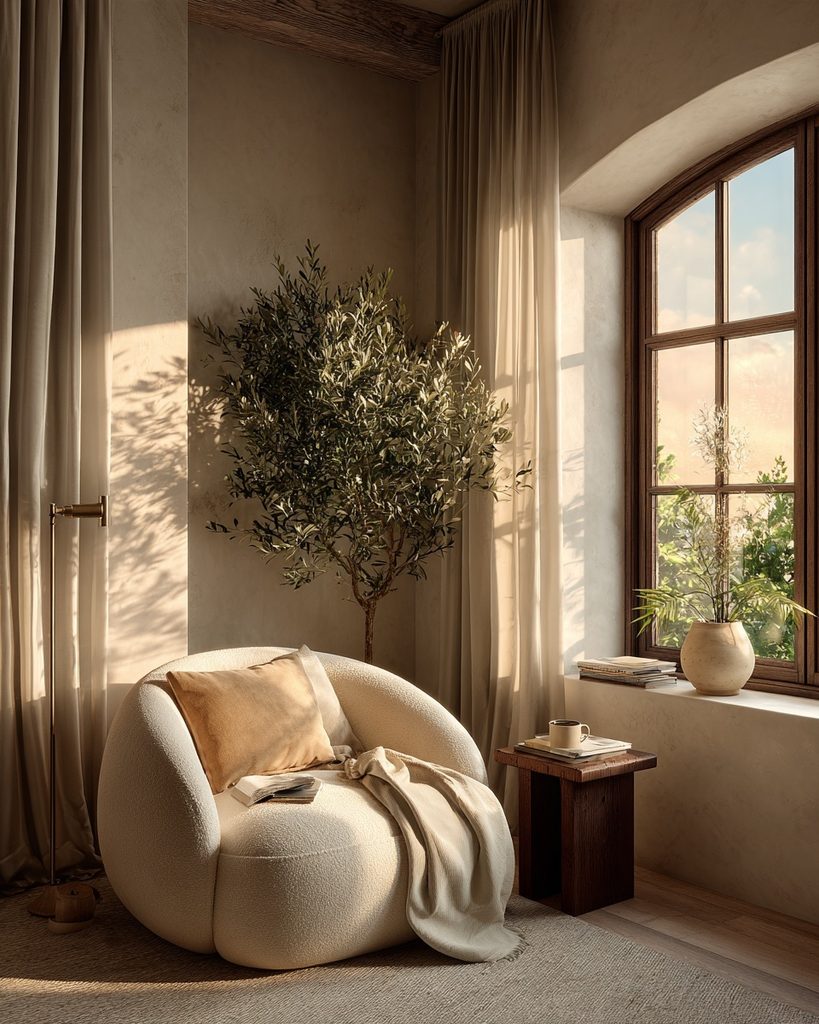
If you have a little extra space in your bedroom, consider turning it into a relaxing reading or sitting corner. An armchair or comfortable seat, a small side table, and a warm light are often enough to create a peaceful spot for reading, enjoying a morning coffee, or simply slowing down at the end of the day. If possible, place the chair near a window so you can also enjoy natural daylight. A book within reach and a simple cushion can make the corner feel welcoming without adding unnecessary clutter. Even in a smaller bedroom, a compact chair placed in an unused corner can make the room feel more functional and personal rather than purely decorative.
Keep Clutter Under Control
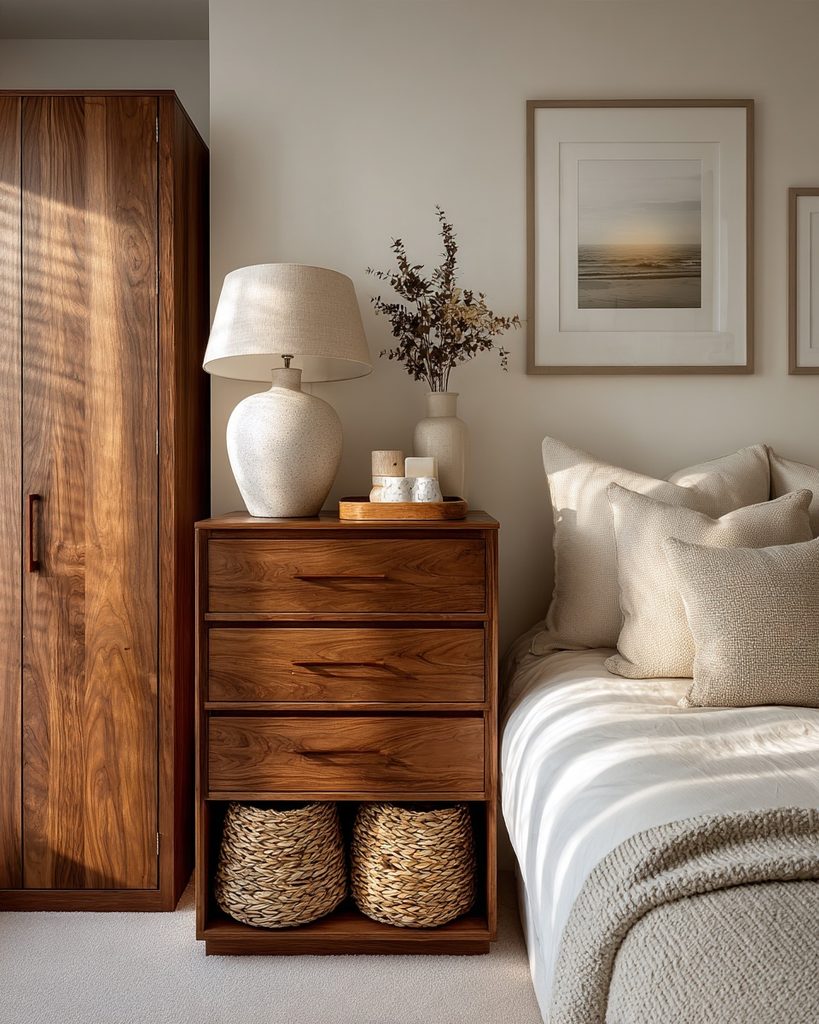
Even carefully chosen decor can begin to feel cluttered if there is too much happening in the room. Warm bedroom decor works best against a calm and tidy backdrop, so it is worth keeping surfaces relatively clear and giving everyday items a proper place. Simple storage solutions such as baskets, nightstand drawers, a bench with hidden storage, or a well-organized wardrobe can help keep the room feeling restful rather than chaotic. You do not need to make the bedroom extremely minimal unless that is your personal preference. The goal is simply to reduce unnecessary visual noise so the thoughtful details you have chosen can stand out. A bedroom that is easy to keep tidy naturally feels more relaxing and comfortable to spend time in.
Start Small and Let the Room Grow
Making your bedroom feel warmer and more comfortable does not require anything extravagant. Most cozy bedroom decor ideas involve small, affordable changes that can be introduced gradually, such as changing a light bulb, adjusting the bedding, adding a soft rug, or bringing in warmer colors. Instead of trying every idea at once, treat the process as an experiment. Make one or two small changes and observe how they affect the room. Over time, keep the elements that suit your personality, the size of your space, and your budget. A warm and restful bedroom is usually created gradually through a series of thoughtful choices rather than one major transformation, and that is exactly what makes it easy to achieve.
